My parents recently celebrated their 50th wedding anniversary. In preparation for the big event, I asked my mom to send me family photos so I could prepare a memory book. Along with photos of camping trips, family reunions, and me in the bathtub when I was 2, came a bunch of old family photos—including this one of my dad’s grandparents and their family in front of their home in Germany in the 1920s.

Frieda Möeller (on right) with her parents, Magdelena and Ferdinand, an uncle, and her brother Henry, in front of their cottage in Krokaw, Germany. c. 1927.
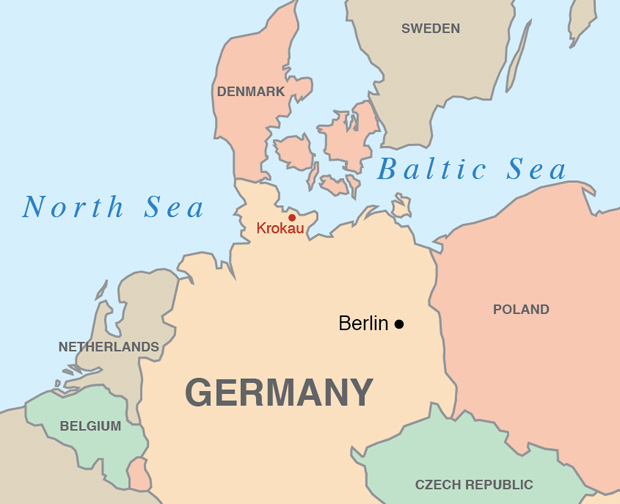 Frieda Möller grew up in Krokau, in a small village in the state of Schleswig-Holstein, not far from the Baltic Sea in Northern Germany. Krokau today has a population of 477 (according to Wikipedia) and I can’t imagine that it was much bigger back then.
When my grandfather, Henry, immigrated to the United States he found work as a farm hand and Krokau’s coat of arms depicts a windmill and water, so I imagine that Krokau was a coastal farming village. Since Frieda worked as a cook in a castle as a young woman, I also imagine that she had dreams of something bigger than staying on the farm. It was, after all, the 1920s during the Weimer Republic in Germany. Women were gaining more freedom. In 1918 they had even been given the right to vote.
So far all I have done is imagine what her life might have been like. It’s time to dig a little deeper. In December I won a three month’s subscription to Ancestry.com, through a charity auction put on by Solutions at Work. I think it’s time to roll up my sleeves, start asking questions, and put that subscription to use.
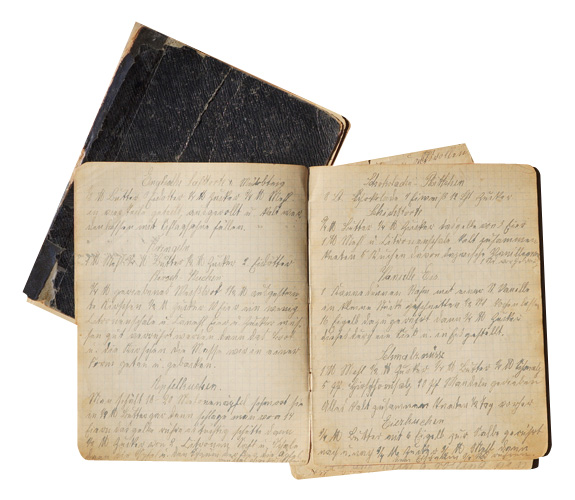
 The Castle Cook