Category Archives: The Notebook

Molded Puddings and Mouse Butts

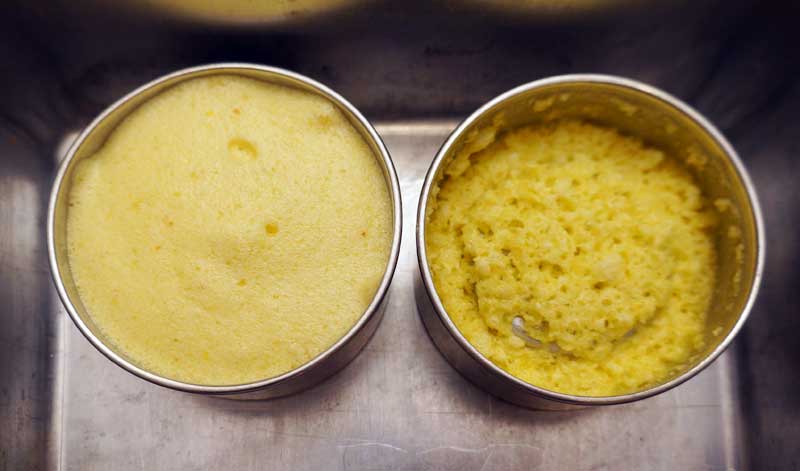
Sometimes I think I am in over my head with this project. Here’s a picture of my latest disaster:
Citronella Pudding Fail

Citronella Pudding: the one on the left was made without wine, the one on the right was made with wine.

I’m a good cook and an experienced cook (I’ve been cooking and baking since I was 10), but I’m no professional pastry chef. Initially I thought, “Lemon Pudding. Yum. How hard could that be?” Here’s the difficulty. Some of the recipes in the Castle Cook’s notebook show up more than once. In the case of Citronella Pudding, there are actually four entries—all a little different. Since there were four, I guessed that Citronella Pudding was eaten frequently at the castle, so I better give it a good try.

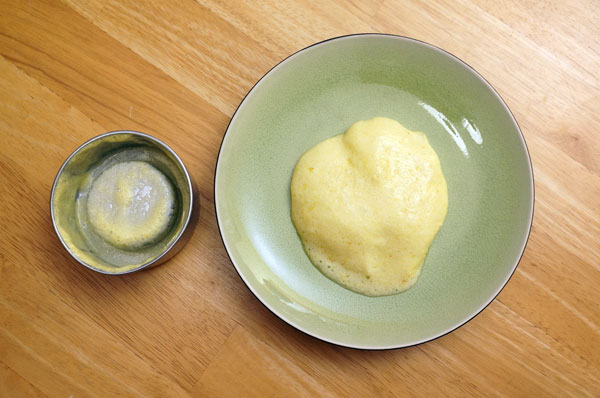
One of the recipes involved cooking the pudding, so I set that aside for a later try. The other three seemed to be uncooked, gelled puddings that were set in a mold. The ingredients were the same (except for the addition of wine in one recipe), so I averaged the ingredient amounts to come up with one recipe which I tried both with and without wine. With me so far? I didn’t have ingredients to make a fruit sauce to top the puddings, so I made the puddings and set them to rest overnight in the refrigerator. Big mistake. The pudding with wine was a runny disaster. I think the beaten egg whites started to separate overnight. I had higher hopes for the pudding without wine, but when I unmolded it, it lost it’s shape and splooshed onto the plate, like this:
Citronella pudding failure unmolded

Not a very lovely presentation.

So you might be asking yourself, “Why is this posted entitled ‘Molded Puddings and Mouse Butts’“? After my failed pudding attempt, I trolled the internet looking for other examples of uncooked egg puddings to see if I could improve my technique. Not surprisingly, there are not too many. Nowadays, it’s generally verboden to serve uncooked eggs. However, I found one blog post for Wine or Lemon Pudding from the 19th Century. The description mentioned a book published around the turn of last century called Henriette Davidis’ Practical Cook Book Compiled for the United States From the Thirty-Fifth German Edition. It’s still in print, so of course I ordered it, thinking it could provide some tips I so sorely need. I think it will be a good resource for the deserts I am making, but I wasn’t prepared for the other types of recipes I would find.

There are some things I don’t want to know how to cook. This book includes recipes for such culinary treats as broiled bear paws, brain dumplings, ragout of badger, and roasted beaver tails. There’s pigeon soup for invalids, boiled calf’s head with gravy, head cheese in jelly, and all kinds of ways to cook innards and sweetbreads. The Vocabulary of Culinary Terms at the end of the book even includes an entry for “mouse buttocks”. Seriously? I can’t imagine why roast beaver tail never caught on. For all you iron chefs out there, feel free to email me. I’m happy to pass along any recipes that you think you can stomach.


Translation Is Complete

The raw translation is complete, which means I now have a decent overview of the recipes in the notebook. There are a total of 121 unique recipes. They fall roughly into these categories: Beverages, Cakes and Torte, Candy, Cookies, Donuts and Pastries, Jams/Jellies/Preserves, Mousses/Parfaits/Ice Cream, Pancakes, Puddings, and a Miscellaneous category. I updated the recipe page with the full list.

It looks like my great-aunt might have been working in the castle’s kitchen long enough to master pastries and move on to learning other skills. Included in the notebook are recipes for preserves, pickles, wine, and pickled herring. There’s even one for making beer out of rock sugar. I think I should try tackling that one soon, since you have to let it stand for a couple of weeks before you can drink it. I can hardly wait for berry season though. I love making jam.

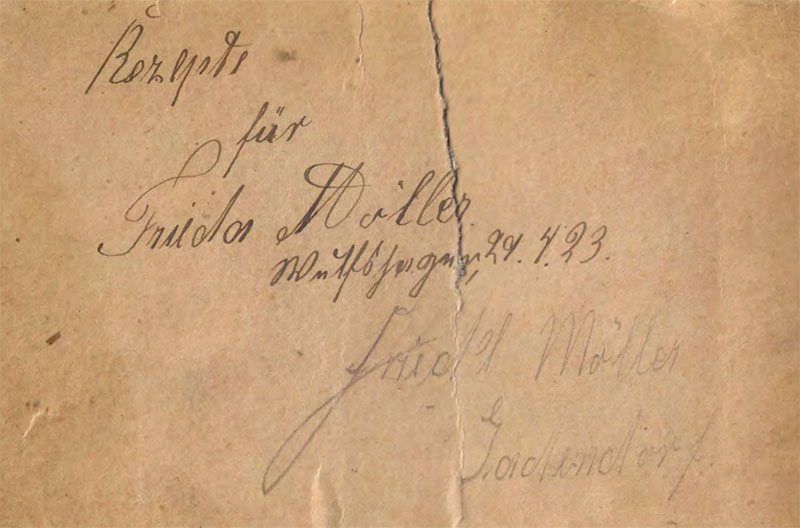
I also have another clue. The inside cover of the notebook has an inscription:

Inscription on inside cover of the notebook.

Inscription on inside cover: Recipes for Frieda Möller, Wulfshagen 29.4.23, Friedel Möller, Gadendorf.

Wulfshagen and Gadendorf are in the same part of Germany as the village where Aunt Frieda and my grandfather grew up. Clearly, narrowing down the location is going to take a lot more research. Both covers also contain dates—April 29, 1923 on the inside front cover and 1922 on the inside back cover. That means she would have been in her late teens when she worked there. If she was preparing jams and pickles she must have work through at least one summer, as well. Perhaps she started as a pastry cook in 1922 and worked her way up to canning and preserves by the summer of 1923?


Translation Is Under Way

It seems that I have two conflicting New Year’s resolutions. The first is to get the cookbook translated and try it’s (hopefully) wonderful pastries recipes; the second is to lose 10 pounds. Story of my life. I love pastries and baked goods. That’s probably an understatement. It’s more like a dog seeing a squirrel when I see a Patisserie sign. Just ask my husband who graciously endured the summer I decided to improve my pie crusts by making a pie a week. That wasn’t very beneficial for our waistlines either. Well, at least I’ll stick to one of my resolutions.

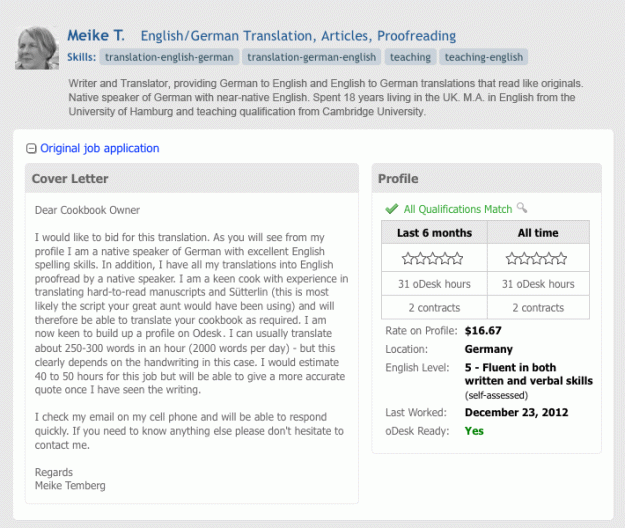
The translation process has begun. It was such a surprise to have a flood of translators applying for my project. I closed the job post 20 hours after I placed it because I already had 17 candidates. Some I could eliminate right away since they weren’t native German speakers or their experience seemed limited to business translations. Others though were really intriguing.

Meike's appplication to translate the cookbook.

Meike’s application.

I received these wonderfully personal letters from applicants who were also avid cooks, history buffs, and genealogists. They offered helpful translations tidbits, like the old German script is called Sütterlin and a German pound = 500 grams while an American pound= 454 grams. Ultimately the choice of translator came down to three things: 1. enthusiasm for the project, 2. ability to read the handwritten copy, and 3. a sample translation test.

The translator I selected, Meike, is terrific. Her English is top notch, she’s quick at translation, and she’s been giving me great tips as well, like the fact that German eggs were smaller in the 1920’s than the average eggs we get at the market today.

Now that I have a couple of recipes from the sample translations I thought I’d try one out this weekend. The first one that caught my eye is called Apfel im Schlafrock (literally Apples in Dressing Gown). It involves thick apple slices soaked in rum and something called arrack, then battered, fried and turned in sugar and cinnamon. New Year’s Resolution Score: cookbook resolution = 1 / diet resolution = 0.

The Internet Is An Amazing Place

I watch too much T.V. I thought I’d get that confession out of the way right up front. Inspiration, however, comes to us in unexpected ways. Sometimes the bits of your daily life intersect and an amazing idea pops out of your subconscious.

As I get older I have this nagging suspicion that I should be doing something more valuable with my time than watching T.V. That’s part of what motivated me to start this project. While organizing my home office, I found my Great-Aunt’s notebook hidden away in a stack of file folders and took a notion to find out just how much it might actually cost to translate the cookbook. I’m internet savvy. I was sure I could locate some basic information about the cost of translation online, but I had no idea how easy it would be.

I started with Craig’s List and then Ancestry.com. Both were dead ends. Craig’s List seemed to be more about selling goods than offering services and Ancestry.com’s Hire An Expert tab offered genealogy research, but not translation services. When in doubt, consult Google, right?

I did a basic Google search for “german translator”. The first page of results offered lots of “free” translations services, but those turned out to be online word translators. You know the kind—English to German, German to English. I needed an expert. A native speaker with some familiarity with old German script. Hopefully someone reasonably priced.

At the top of the 2nd page I found a paid listing for a site that looked promising: oDesk.com. oDesk.com turned out to be a digital workplace, connecting freelancers from around the world with businesses and individuals who need their services. A perfect place to find a translator with specialized skills. oDesk seemed very professional, with checks and balances to protect both parties. The process was clear and the site was easy to use, so I decided to take a leap. I posted this job:Job Posting "Translate Handwritten German Cookbook"

I had started my half–hearted search at 2:26 pm, by 2:30 pm I had found my translation service, by 3:00 pm I had created an account and posted my job offer online.  Maybe there was something I could do with this journal after all.

The Notebook

The Castle Cook's Notebook

The Castle Cook’s Notebook

A few years ago my Great-Aunt Frieda passed away. I didn’t know her well. In fact, I had only met her on a couple of occasions. She immigrated to the United States from Germany before World War II and spoke with a strong German accent. That was about all I knew of her—or at least all I had taken the time to learn. I had always thought of her as old. Old world. Old fashion. Not of any consequence to me as a young American woman, trying to be grown-up and modern; to make my mark in the world.

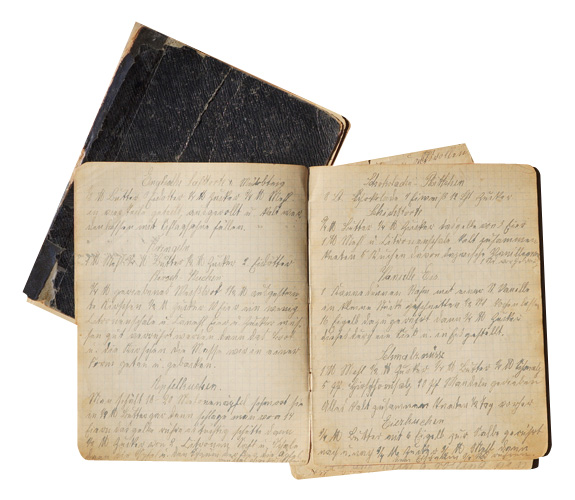
She and her late husband didn’t have any children, so my parents acted as executors for her estate. I enjoy cooking and I venerate old publications, so my parents bequeathed me some of her old fashioned baking pans, decorating tools, cookbooks, and one thin, ragged, handwritten notebook. The notebook’s dark umber cover was cracked and flaking away from it’s backing. It was completely separated from it’s binding, held together with clear packing tape. The antique pages, lined with a light cyan grid, were yellowed and stained. To a graphic designer it was gold. Pure gold!

I was told that my great-aunt had worked in the kitchen of a German castle near her home as a young woman. There were no master cookbooks for the kitchen. Apprentice cooks were required to create a notebook of recipes as they learned. This ragged notebook from 1922 was her handwritten recipe book.

The handwriting is nearly impossible for me to read. For starters, it’s written in German. I took Spanish in high school. German might as well be Latin to me. It’s also written in old German script. Very beautiful, but not so easy to read. I think my father must have learned to write that way when he was a child. His handwriting has always been a little scrolly. I can guess from the recipe titles that she must have been a pastry cook. A few even have some lines in English, so she might have added to the book after she moved to The States.

My mom and I mused that it would be great to get it translated one day. I showed off the book to other graphic designers who cooed over it’s singularity and coveted my new find. I scanned the pages. Then I carefully packed it away—waiting for the day when I found inspiration and thought of a unique use for a such a rare treasure.