Sometimes I think I am in over my head with this project. Here’s a picture of my latest disaster:
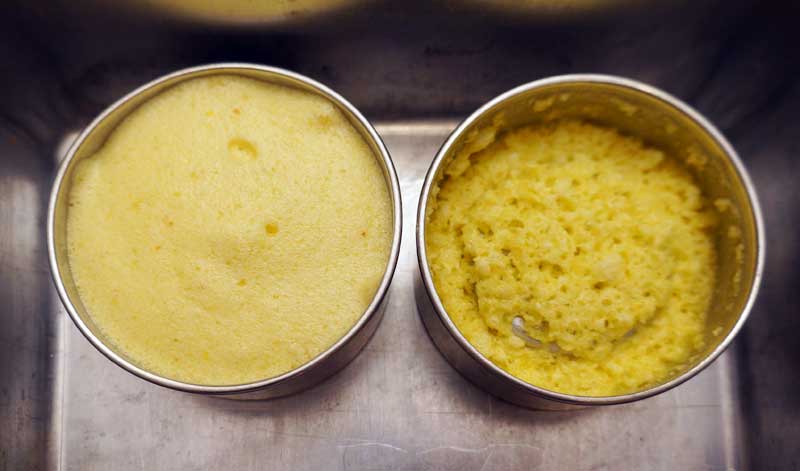
Citronella Pudding: the one on the left was made without wine, the one on the right was made with wine.
I’m a good cook and an experienced cook (I’ve been cooking and baking since I was 10), but I’m no professional pastry chef. Initially I thought, “Lemon Pudding. Yum. How hard could that be?” Here’s the difficulty. Some of the recipes in the Castle Cook’s notebook show up more than once. In the case of Citronella Pudding, there are actually four entries—all a little different. Since there were four, I guessed that Citronella Pudding was eaten frequently at the castle, so I better give it a good try.
One of the recipes involved cooking the pudding, so I set that aside for a later try. The other three seemed to be uncooked, gelled puddings that were set in a mold. The ingredients were the same (except for the addition of wine in one recipe), so I averaged the ingredient amounts to come up with one recipe which I tried both with and without wine. With me so far? I didn’t have ingredients to make a fruit sauce to top the puddings, so I made the puddings and set them to rest overnight in the refrigerator. Big mistake. The pudding with wine was a runny disaster. I think the beaten egg whites started to separate overnight. I had higher hopes for the pudding without wine, but when I unmolded it, it lost it’s shape and splooshed onto the plate, like this:
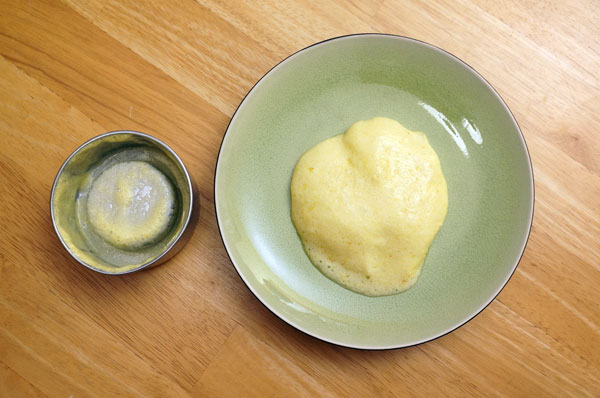
Not a very lovely presentation.
So you might be asking yourself, “Why is this posted entitled ‘Molded Puddings and Mouse Butts’“? After my failed pudding attempt, I trolled the internet looking for other examples of uncooked egg puddings to see if I could improve my technique. Not surprisingly, there are not too many. Nowadays, it’s generally verboden to serve uncooked eggs. However, I found one blog post for Wine or Lemon Pudding from the 19th Century. The description mentioned a book published around the turn of last century called Henriette Davidis’ Practical Cook Book Compiled for the United States From the Thirty-Fifth German Edition. It’s still in print, so of course I ordered it, thinking it could provide some tips I so sorely need. I think it will be a good resource for the deserts I am making, but I wasn’t prepared for the other types of recipes I would find.
There are some things I don’t want to know how to cook. This book includes recipes for such culinary treats as broiled bear paws, brain dumplings, ragout of badger, and roasted beaver tails. There’s pigeon soup for invalids, boiled calf’s head with gravy, head cheese in jelly, and all kinds of ways to cook innards and sweetbreads. The Vocabulary of Culinary Terms at the end of the book even includes an entry for “mouse buttocks”. Seriously? I can’t imagine why roast beaver tail never caught on. For all you iron chefs out there, feel free to email me. I’m happy to pass along any recipes that you think you can stomach.


 The Castle Cook