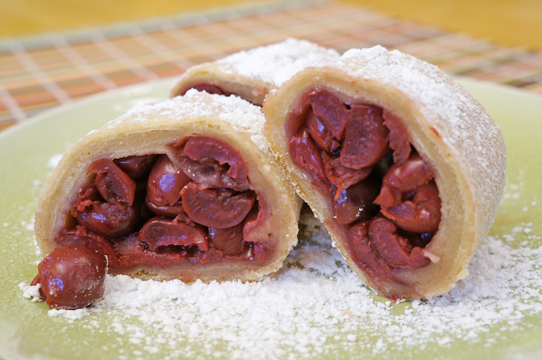
I have to say I’m a little disappointed that there’s only one recipe for strudel in the Castle Cook’s notebook. I love Strudel. This was my first strudel-making adventure and I had so much fun. One part of the recipe actually calls for lifting the dough over your head, then throwing it down on a hard surface 100 times. How fun is that! By expert strudel-making standards I’m sure my first attempt would rank as an abject failure. The dough was pretty tough. By fun-in-the-kitchen standards though, I’d rank it a “10”.
Kirchenstrudel (Cherry Strudel)
2-1/2 cups sifted flour
1 teaspoon sugar
1 cup warm water
4 cups pitted cherries
1 cup sugar
1/2 tsp. cinnamon
1/2 cup melted butter*
Mix flour and sugar together in a large metal bowl. Gradually add the warm water, mixing until it forms into a sticky ball. In the bowl or over a lightly floured cool surface, raise the dough above your head and then hit it hard against the surface about 100 times, or until the dough is smooth and elastic. (After 15 or 20 times it should no longer be sticky.) Knead the dough for another couple of minutes, then form it into a round ball. Lightly brush top of dough with cooking oil. Cover dough and allow it to rest 30 min.
Prepare the filling while dough is resting. Toss the cherries with sugar and cinnamon to coat evenly. Set aside for at least 30 min., stirring occasionally. If using canned cherries, drain well before tossing with sugar and cinnamon.
Cover a table with a clean sheet, allowing it to hang over the sides. Sprinkle it with flour. Place dough on center of cloth and roll it out as large as you can. If necessary, sprinkle more flour under dough so it does not stick. Brush off any flour on top, then brush top of the dough lightly with cooking oil (the oil aids in stretching the dough).
Lift the dough and gently, but steadily, pull the dough in opposite directions while it rests on your hands and forearms, being careful not to tear it. Lower the dough to table. Walking slowly around table, pull along the edges of the dough. Keep pulling and stretching, until the dough is as thin as tissue paper and drapes over edge of table. Trim off the thick outer edges.
Brush the dough with melted butter. Drain off excess liquid from the filling. Place the filling a strip, approximately 8 inches from one edge of the dough. Rolled the strudel, beginning at the filling end. Use the sheet to help you by grasping the cloth with both hands, then lift the cloth up and over the filling, folding the dough over. Lift the cloth back up, but leave the dough over the filling. Pull sheet toward you and begin to roll the strudel by lifting the cloth to help it roll. Once the strudel roll is complete, gently move it onto a greased baking sheet and forming it into a “c” or an “s” shape.
Bake at 350°F for 35 to 45 min. or until the strudel is golden brown. Brush it with butter several times during baking. The strudel is done when it is golden and makes a crackly sound when touched. Remove from oven and cool slightly, then sprinkle with powdered sugar. Cut with a serrated knife.

There is a a great video on YouTube about rolling strudel dough: Hungarian Cherry Strudel
Needless to say, I didn’t stretch my dough anywhere near the size of the table (maybe half the size). That was probably why my dough was so tough. However I think this is a skill I would like to practice and perfect. It would be a thrill to actually stretch a dough to table size!
*Note: The recipe in the castle cook’s notebook didn’t specifically call for butter, but all the examples recipes I reviewed used it and I couldn’t see how to get the strudel to brown nicely without it, so I added it.
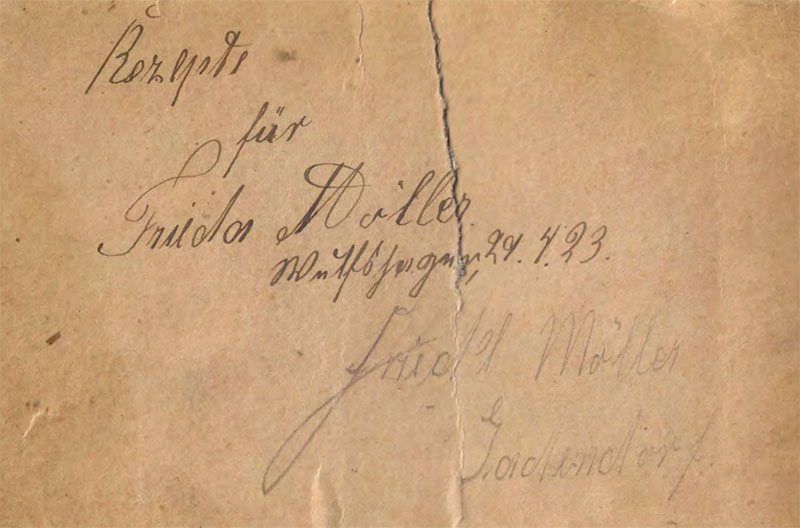


 The Castle Cook